
Active Travel Summit 2022
The Case for Place – By Scott Barrett
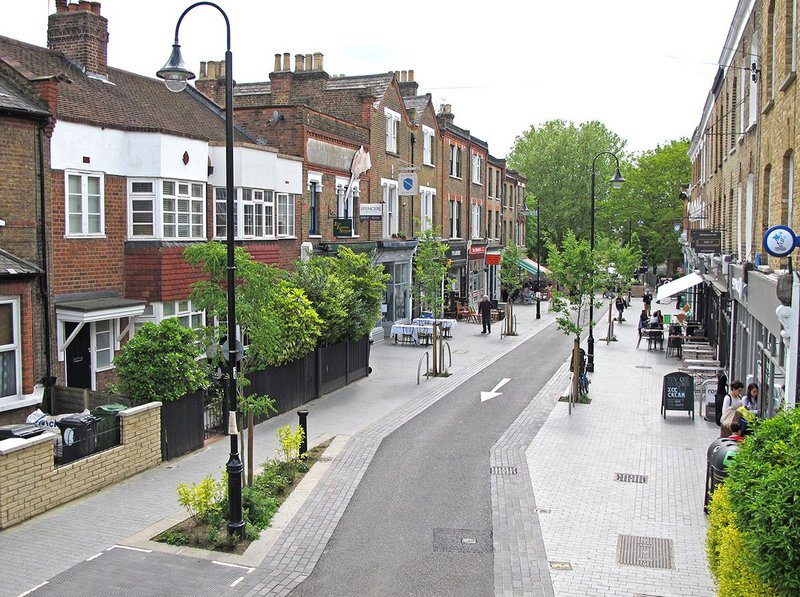
Transport development and placemaking
In December 2022, I attended the Active Travel Summit hosted by New London Architecture in Central London. The summit centred around the ongoing paradigm shift in transport development and placemaking. Overall, the Summit was highly thought-provoking in regard to the following issues:
- How to reach net-zero;
- How to stimulate and maintain the vitality in our towns and cities;
- What our collective vision for streets is going into the future.
The event covered three sessions of discussion:
- Post-pandemic lessons
- New transport modes
- The battle for streets
- Active Travel England
Throughout session one, we heard from Active Travel England’s (ATE) director of inspections, Brian Deegan. Brian discussed the current policy logic within ATE, and detailed some analytical and evidence-based methodologies. These approaches have attempted to enhance outcomes in shaping places and public realm improvement schemes across the UK. The session underlined the essential role of inspectors as more authorities focus on revitalising town and city centres. The aim is to engender safe, coherent and dynamic multimodal public spaces. The methods adopted by ATE have informed street design principles within the soon-to-be-published “Manual for Streets 3”. Coordination across ATE, CIHT and DfT on the forthcoming guidance show promise for the sector. ATE has ambitions for half of all journeys in towns and cities to be walked or cycled by 2030.
Experience from the London Borough of Hounslow
We also heard from Katherine Dunne from the London Borough of Hounslow. Listening to Katherine’s experiences and discussions about the Low Traffic Neighbourhood (LTNs) implementation process in Hounslow was insightful. The media will often present these schemes as controversial alongside the trendy scapegoat of the 20-minute neighbourhood. However, tactical and experimental modes of urbanism aid in gradually shifting attitudes and provide a testbed for more radical prospective schemes. Katherine highlighted the LTN process could be streamlined through trial periods, continuous monitoring and community engagement.
The impact of LTNs
Katherine Dunne’s comments connect with a comprehensive London study released in January 2023. The study demonstrated, amongst other results, that LTNs have induced an average 46.9% internal traffic reduction. And have simultaneously resulted in a negligible traffic increase on surrounding roads. You can read this insightful and momentous study here. Studies such as this are essential to provide a basis for justification for the introduction of LTNs. This concern is especially apparent in circumstances of apprehension from residents.
Shortcomings of street design to date
Session 3 discussed taking stock of the progress and shortcomings up to this point in street design. The discussion centred on reducing traffic in our cities, which seems an obvious quandary. However, it was highlighted that many approaches seem predicated on the idea that incentivised sustainable travel is the only solution, which must contend with shared street space limitations. Alternative ideas and practical implementations were discussed at the summit.
Modifying street space for the future
The new Census data shows that despite London’s lower car ownership rates (41% of households do not own a car), vastly disproportionate amounts of the streetscape is dedicated to roads and on-street parking in the capital. In the city, 12.4% of land is consumed by roads. For perspective, 8.8% of London’s land is housing. This issue is a hard truth that authorities in urban areas must confront. The notion of dynamic street design was proposed at the summit as a method to make more purposeful use of street space and disincentivise excessive car use.
Dynamic Street Design
What if streets could adapt to the use of the spaces around them and become more fluid and flexible? A dynamic street environment would be structured to prioritise active travel and public transport options during demand-intensive periods (i.e. peak hours) and restrict or prohibit single-occupancy cars and taxis. Across the day, access for particular vehicles could be modified to suit the types of surrounding activities and associated use patterns by the public. Innovative forms of Traffic Regulation Orders would be instrumental to this, Oxford City council have enforced a similar mechanism with Traffic Filters. Traffic filters in Oxford are a system which has been imported from Europe and translated for Oxford’s context. Interventions such as this would face contestations from taxi drivers, and solutions would be needed to consider servicing and refuse. Dynamic streets also have implications for demand-responsive travel and could leverage 5G digital data management. Iterative experimentation with dynamic street design could be an effective way to begin a constructive dialogue around how we practically and strategically plan areas to prioritise and pragmatically integrate different modes.
Putting it into context
This discussion highlights that transport planning has become a crucial discipline, inextricably entangled with spatial planning to achieve immediate and long-term objectives. One context the notion of dynamic streets could be incorporated into is Liverpool Street in Central London, which sees heavy commuter activity across the day and becomes a bustling leisure hub at night. Designing a dynamic environment in this context could accentuate the distribution of footfall and use patterns and trips across a daily and seasonal profile. This approach could eliminate wasteful car travel. On a broader scale, dynamic streets expands our conceptual horizons to view street space as a setting which is in flux. Streets do not need to be confined by a rigid and immutable design that is slow to respond to externalities.
Focus across the UK
Speakers at the Summit acknowledged the dominant discussion for solutions within London. However, unlike most of the country London has a solid foundation. Genuine progress will materialise when solutions can be translated to rural and alternative urban contexts throughout the UK. This approach is a commitment that policy desperately needs to grapple with to resolve the broader challenge. A prominent finding within the recently published 2021 UK Census has revealed that a majority of the economically active population travel less than 10 km to their workplace. Sustainable and active means of travel can facilitate 10km commuter distances and these are where ample development opportunities lie.
The need for leadership
The appointment of Active Travel England as a statutory consultee on major planning applications will be a significant step in the right direction when it begins in June 2023. The recent bolstering of funding for ATE is another cause for optimism. The government must proactively support this with a robust and enforceable policy to provide more deliverable conditions for active travel schemes, both as part of developments and as standalone network improvements.Positive takeaways
Despite feeling deflated by the proposed amendments announced for the NPPF, the challenge to transform urban environments for the future is beginning to be approached in the right way. To most of the general public, streets are a banal and unimportant facet of life. This view may be because we have come to be conditioned by an embedded car culture where many of us lack a decent and accessible public realm to spend time. Streets are more than just places we travel through. Streets are where we socialise, communicate, organise and where our commerce should thrive.
Final thoughts
The format we choose for our streets and places can have broader positive and negative ramifications for our economy, environment, personal health and well-being. Not to mention how we choose to live our lives. This perspective is why we should all take responsibility for our streets and what happens to it. The enthusiasm for change was palpable among the practitioners present at the Summit. However, constructive criticism will always be instrumental to encourage those in power to do more.[uncode_woocommerce_account_forms]
Back To News


Sign up to our Email Marketing
Sign up to stay in the loop with the latest updates, job opportunities, and insights from the team.