
The last mile
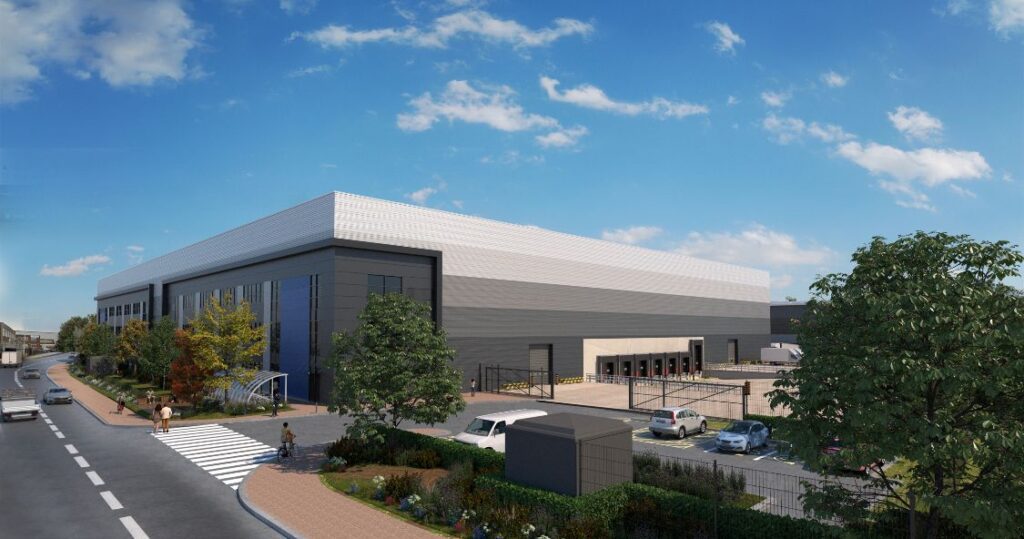
People need their goods delivered to their homes and often their workplaces. And they want their order now. They don’t need to get stuck on the M25 or M6 either (which will cost them more in the process).
Property market changes
The Last Mile is now so important in our society. The result is a change in the landscape of the property market and a forced change in the status quo of the planning system. This directly impacts as it is currently set up for developers.
Indeed, the planning system has struggled to keep pace. This means sites traditionally allocated for housing, are now regularly more favourable in the marketplace for industrial and logistics uses.
The principle of such development is often being out of tune with preferred Local Plan policies. There is often a range of technical challenges that must be overcome to satisfy planning application requirements. These simply aren’t a consideration with more typical urban development sites.
The movement of goods and people is no exception to the planning challenges. It has the potential to visibly impact road congestion and highway safety in areas otherwise suited to encourage sustainable travel. However, there are related noise and air quality issues to consider as well.
mode’s response
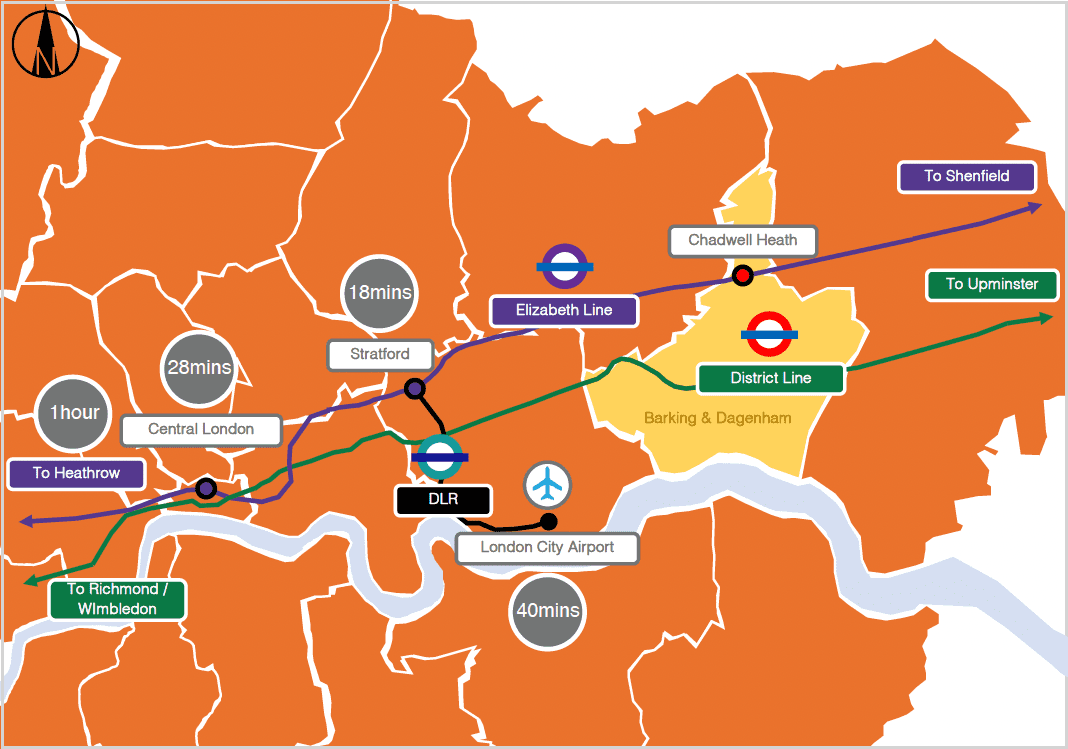
mode has been leading the way in these challenges and unlocking industrial and logistics sites for clients.
“The mode team has been at the forefront of helping us to secure planning approval on our development projects, including securing support from highways officers, TfL and National Highways, when faced with challenging site constraints in urban areas. We are delighted with their service and their ability to work proactively with us, the project team and local authorities.”
Aisling O’Kane, Vice President, Head of Planning, London, Bridge Industrial
The biggest challenge
Perhaps the biggest challenge with the transport planning of industrial and logistics development is defining what these land uses represent. Residential or even office space, tends to generate relatively predictable people movements depending on the accessibility of a site. Conversely, industrial and logistics developments are often planned and built for speculatively.
End user characteristics can therefore be very difficult to predict and bespoke to the individual needs of their business operations. All of which have yet to be defined.
Moreover, in order to make developments marketable on a speculative basis. Developers often seek planning permission across the range of E, B2 and B8 land use classes.
The opportunity
If flexibility is offered with use classes does of course represent a fantastic opportunity for developers to go to market. This is true especially on multi-unit industrial estates. Often this eclectic mix of businesses can occupy space to the benefit of start-up businesses and the local community. This can however, make highway authorities understandably reticent in agreeing with trip generation and parking assumptions being made as part of a planning application. Even within the use classes themselves, there is significant potential for differing business models by end occupiers.
First we consider that there could be a range of occupier potential across flexible use classes. Then we have the Last Mile and where does that fit in?
Well, almost all industrial and logistics occupiers have some extent of logistics activity. This is because it is an inherent purpose for space of this nature to move goods or materials.
If not simply to store goods momentarily and a business’ function is to undertake some type of industrial or manufacturing process. Additionally, there is often a customer who requires produce to be delivered to them directly and within a reasonable timeframe . This necessitates ‘Last Mile’ delivery. Because of this variation, there is then potential for a differing mix of requirements. This includes the quantity of inbound and outbound delivery activity, and by varying vehicle sizes.
A variety of settings
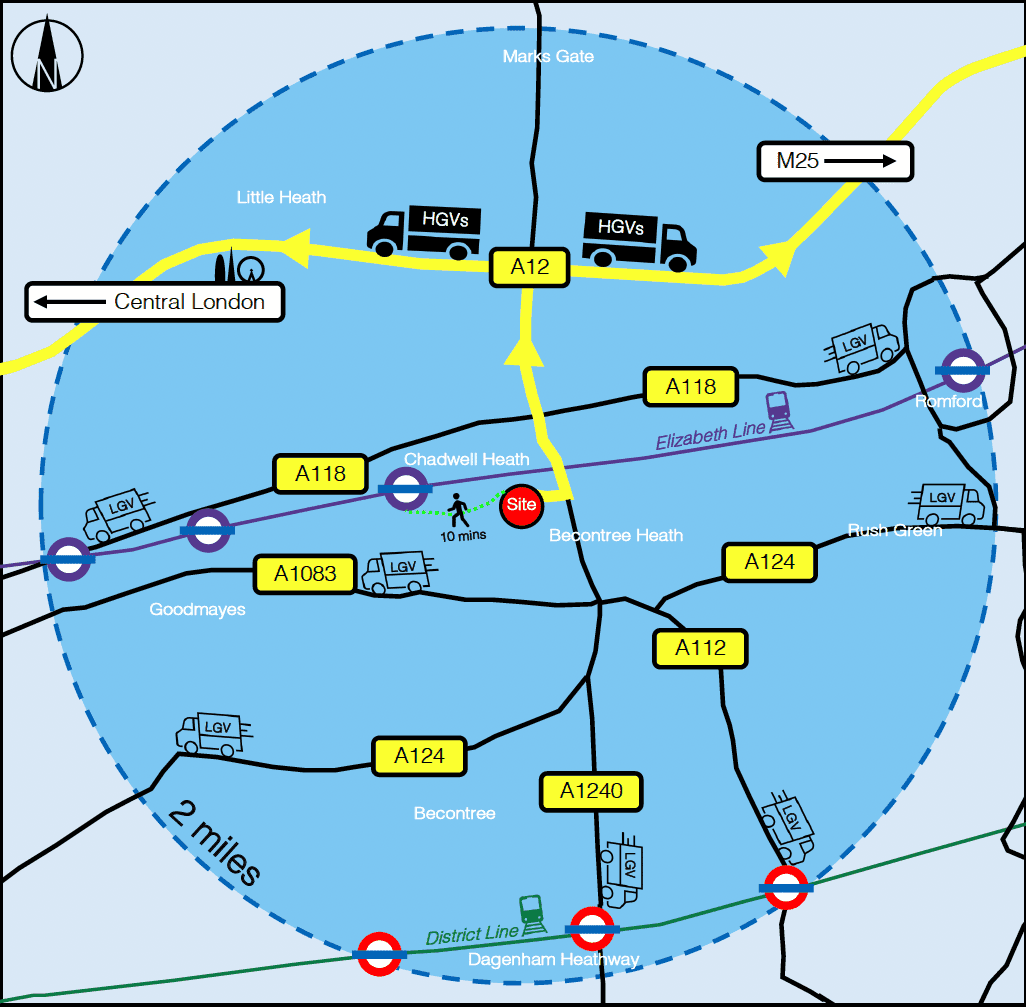
Other than large distribution centres placed to intercept the strategic movement of goods by HGVs on the motorway network, industrial and logistics sites in more urban settings will often be delivered to from such centres or now in many cases, directly from source (if not manufactured on-site, as above).
The lines do blur though. What if a large warehouse near to a motorway could also be near to a large residential demographic well suited to Last Mile deliveries instead of onward distribution to a Last Mile facility? What if a multi-unit site in an urban area could be attractive to a film studio with more irregular logistics activity, as much as a thriving local producer delivering to their community?
Considering all angles
We are often finding that given these uncertainties, local highway authorities, National Highways and the likes of Transport for London are leaning on the side of caution and asking for the very worst-case possible outcome to be assessed. This is often to include for the potential of Last Mile type operations, whereby a high degree of inbound HGV delivery and outbound van deliveries within the ‘Last Mile’ is to be expected and assessed on the highway network.
Assessing a worst-case outcome of HGVs and vans in addition to staff travel by car does represent a risk to developers in terms of potential off-site highways works that may be levied in response by transport authorities by way of Section 106 financial contributions or additional Section 278 requirements. These are often asked for in urban locations that have had limited local or government intervention in terms of policy making and aligning funding towards the necessary infrastructure to suit.
Understanding the big picture
From ongoing discussions with our developer clients as well as through attending events such as the Last Mile and Tomorrow’s Logistics Conferences in Autumn 2022, we understand the challenges that developers are facing with increasing land buying competition and construction costs, exacerbated by not quite the same return on investment from developing out industrial and logistics planning permissions. The risk of increased capital outlay on highways works conditioned or legally obligated as part of planning consent therefore needs to be handled very carefully as part of the planning process.
Place-making is also an increasingly prevalent consideration now with industrial and logistics development sites. These sites are now expected to offer more in the way of well-landscaped permeability and quality of space for pedestrians and cyclists. Such considerations are less challenging for more traditional urban land uses in comparison with sites requiring HGV access and security issues associated with the manufacturing and storage of goods.
So we have unpredictable trip generation and parking characteristics across a range of flexible land uses, and cost-tight developments increasingly being located and needing to be well connected in more sensitive urban areas to better service the Last Mile, should they even need to; and often without government intervention by way of policy making and targeted funding towards the necessary infrastructure, often leaving developers being expected to pick up the bill.
Success at mode
The team at mode is up to the challenge though and we have had repeated successes securing implementable planning outcomes for our developer clients, responding to many of the above issues.
“We are very pleased with the service mode has been providing us across a number of our development sites. They have supported us in gaining various favourable planning permissions; often in challenging circumstances, where transport was considered a key aspect”
Anthony Hynes, Head of Project Management, Chancerygate
Our approach
We have often been able to address these issues by:
- Advising developers of the opportunities and risks at a site acquisition stage, so that appropriate cost allowances can be made. And doing as accurately as possible so that bids can remain competitive.
- Opening dialogue early with all interested transport authorities. We then draw upon positive, personal relationships to understand perceived issues early on and continue to work with them.
- Research and development into innovative solutions for issues to align with current policies. This includes new solutions on live projects, where no project is treated the same and bespoke solutions are often best.
- We tackle uncertainties associated with flexible land use classes by lobbying a pragmatic viewpoint. We argue that sites are rarely occupied by the most intensive end users across all units. And data sources such as the industry standard TRICS database for similar sites throughout the UK support this in practice.
- Leveraging carbon-reduction-focused policies, using a ‘sustainable travel first’ or ‘car-lite’ approach to trip generation and parking assessments. This can often avoid over-assessing the impact of vehicle trips on the local and strategic road networks.
- Shining a light on perceived residual traffic impacts by breaking these down into constituent vehicle types. This leaves only modest vehicle volumes to assess at different locations.
- Before we commit to support the provision of new physical road infrastructure where impacts may remain, we would seek more intelligent solutions with transport authorities. This can include for management plans such as carefully crafted Travel Plans, Delivery and Servicing Plans and Operational Management Plans.
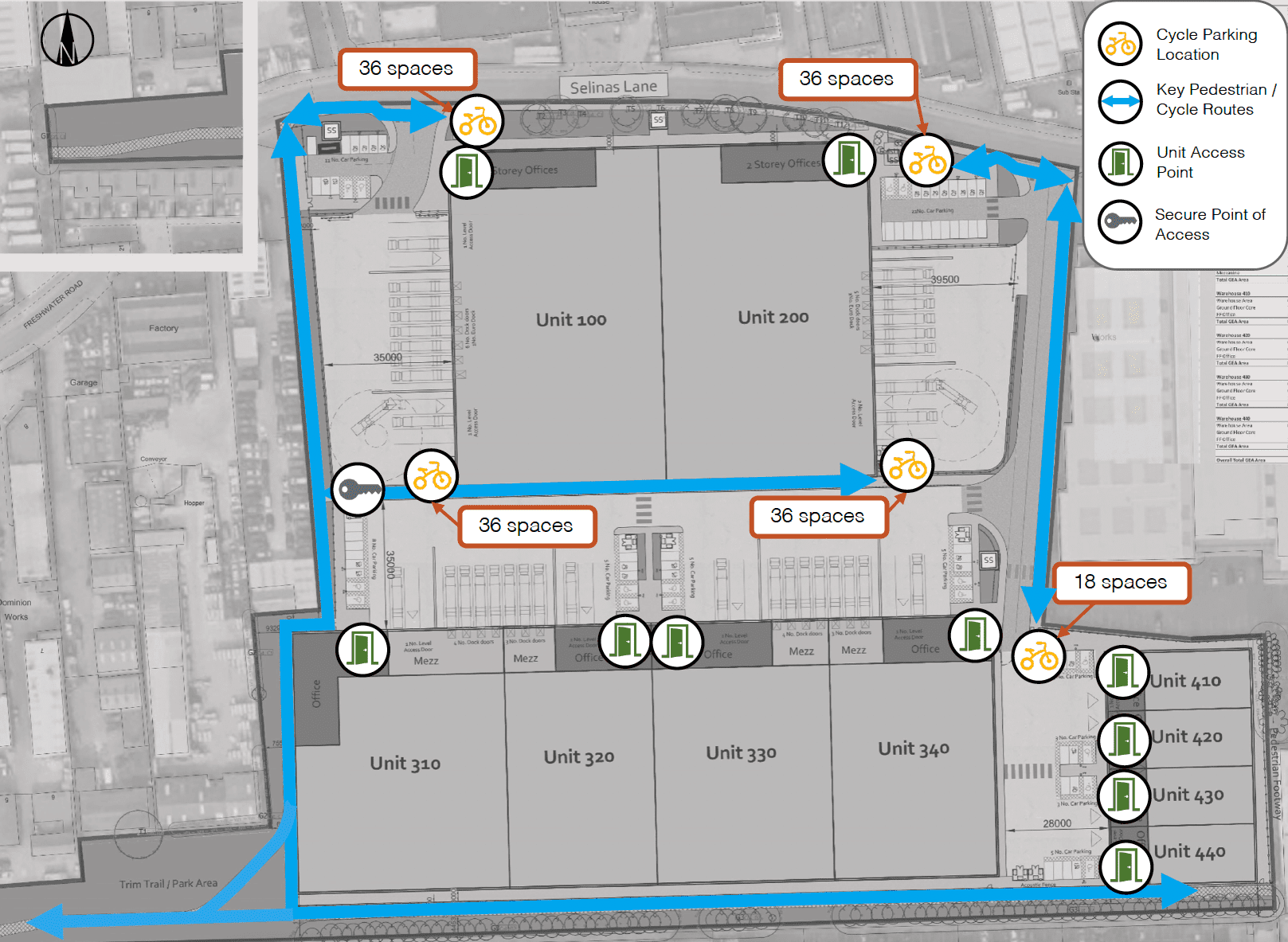
- We work proactively with design teams. This is to develop site layouts and masterplans that incorporate well-thought out connectivity and permeability, sensitive to developer and end user requirements.
Looking ahead
We remain on hand to support developer clients and associated professionals with progressing sites through 2023 and beyond.



Sign up to our Email Marketing
Sign up to stay in the loop with the latest updates, job opportunities, and insights from the team.